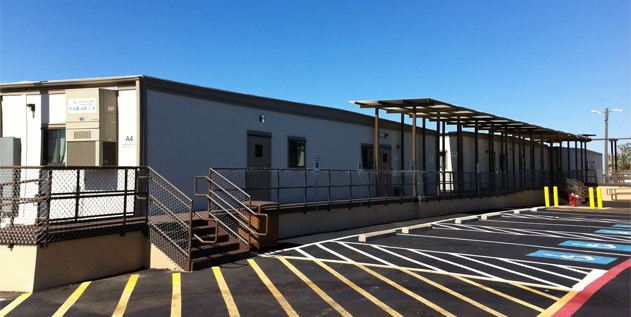
What is PMC?
Permanent Modular Construction also called (PMC) is an off-site construction process that results in high quality, turn-key building solutions. These modular buildings are built to the same building codes as traditional construction and can be built with various materials such as wood, steel or concrete. Permanent modular construction decreases exposure to harsh environments, allowing crews to perform in comfortable conditions for a streamlined construction process.
There are several important benefits that can be enjoyed with the use of permanent modular construction. One benefit is that the completion timeline of the building is significantly shorter compared to standard construction techniques. The shortened construction period can be attributed to the process of building the modular unit in a climate controlled factory, while the site preparation takes place. This includes the foundation and placement of utilities on-site. Another benefit of permanent modular construction is the option of layout configuration and customization through a wide selection of interior and exterior finishes
Whatever the need, permanent modular construction has proved itself as a building method that makes an excellent option for any space need.
Showing posts with label modular airport building. Show all posts
Friday, December 13, 2013
Monday, August 19, 2013
How Modular Buildings Help Airport Expansion Projects
![]() |
| DFW AIRPORT |
An expanding airport may need additional space to accommodate a new terminal, additional employee offices or a waiting area. Airport expansion projects present several unique challenges including remaining compliant with laws while also protecting passengers and keeping flight operations moving. Closing an airport for construction is simply not an option. Modular buildings are a valuable solution for these issues. Modular construction is a quick and reliable solution to airports undergoing expansion or renovation.
Fast Construction
Existing airports moving through a construction project need to remain functional at all times. Closing any single area for a long time can reduce revenue and force the public to find alternative routes. This can have a lasting effect. A modular airport expansion can be constructed in a very short amount of time so that there is no need to close an entire terminal or road to accommodate months or years of construction. This lowers construction costs and keeps the airport working efficiently.
Mobile and Expandable
An airport expansion project often includes many different stages that take place over the course of several years. This may cause a need for temporary buildings . Modular buildings can be erected temporarily in one part of an airport to house staff, passengers or cargo. The temporary building can then be converted into a permanent structure or expanded to accommodate new services. This option is not available with traditional construction.
Environmentally Friendly
Much of the new airport construction occurring today has a focus on environmental friendliness. This is partly because of consumer demand and partly because of the large power usage of a major airport. Modular airport buildings can be equipped with all of the latest features that improve energy efficiency. This includes modern electrical systems, efficient fixtures and special devices that reduce energy usage. This works to lower the overall footprint of the airport during and after the expansion.
Flexible Design
Some new airport construction projects need to work around existing buildings and runways. One of the benefits of using modular buildings is that the structures are very flexible in how they can be delivered, positioned and designed. This makes it possible for an airport to have several modular buildings placed in narrow or open areas where they are accessible but that do not interfere with daily flight operations. Modular buildings can also be craned and lifted into place without having to move around existing structures to make room for it.
Thursday, April 25, 2013
New Airport Construction Goes Modular
Modular construction is taking the industrial world by storm
with superior, considerably faster and more cost-effective building solutions. Modular
development has expanded from its long-established venue of provisional
academic structures and health related office spaces to new airport
construction and airport expansion projects.
Why use the Modular Process for New Airport Construction?
When airports erect new structures or expand existing ones,
there are various things to take into consideration such as security and safety
issues and flight schedules, all while avoiding disruption of daily airport
business. Modular construction provides airports as well as many other
businesses an innovative alternative to on-site construction methods. The
modular construction process allows busy airports to remain open and continue
in their daily functions with limited site disruption. Modular construction
also offers other benefits to airports.
Faster Building Occupancy – New modular construction is
faster and can be erected 40 percent faster than traditional construction and
meets or exceeds all building codes and standards.
Energy Efficient and Environmentally Friendly – Modular
construction is an inherently greener process and more energy efficient because
entire buildings or major components can be reused. Additionally, factory
construction results in reduced product waste and less impact on the
environment.
Low Maintenance Modular Buildings – Airport buildings can be
low maintenance by incorporating some energy efficient fixtures offered with
modular construction. Some examples include programmable thermostats for
heating and air control, occupancy sensors for lighting and automatic dimming
controls.
Permanent and Temporary
Options - Airports can use modular construction for permanent or temporary uses.
For instance, airports adding a new terminal or undergoing a large renovation
project can utilize a temporary modular office building to house displaced
workers during the construction or renovation process. Airports can also use
modular buildings for administrative offices/complexes, retail shops, employee
break rooms or lounges, restroom facilities, ext.
Modular construction offers the flexibility to meet the
needs of the industrial world. Modular buildings can be designed to meet the
safety concerns of airports including fire alarms and security systems, making it an excellent choice for any airportsconstruction needs.
Subscribe to:
Posts (Atom)