Monday, August 5, 2013

Building the prefab Contemporary Resort at Walt Disney World

modular resort hotel building
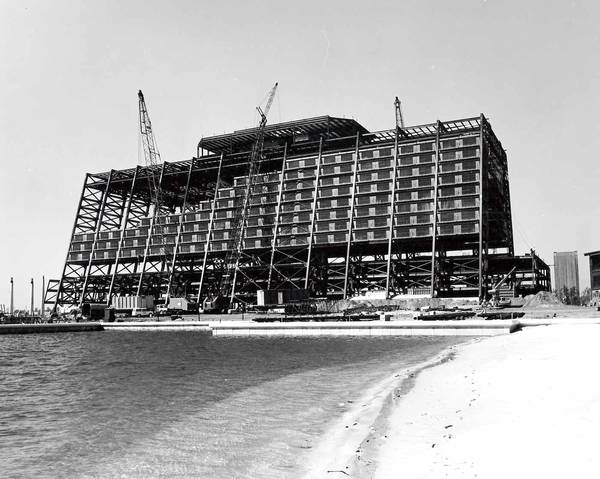
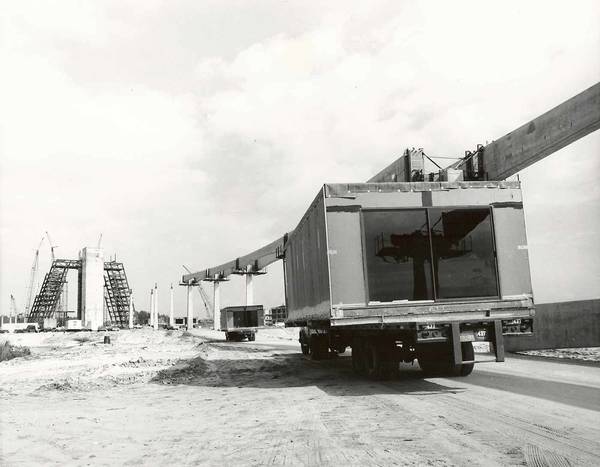
Imagineering Disney has a great gallery of construction shots of the Contemporary Resort, a huge, modernist A-frame structure whose rooms were all prefabbed offsite and crane-lifted into place.


prefab hotel building

Source: http://boingboing.net/2013/07/27/building-the-prefab-contempora.html

Wednesday, July 31, 2013

Use Modular Building for Healthcare Construction


modular medical clinic

Modular medical structures are becoming increasingly popular for a variety of reasons. The main draw is that construction time is sharply reduced. The advantages don't just stop there however; a modular building has much more to offer the healthcare industry.

Controlled Environment

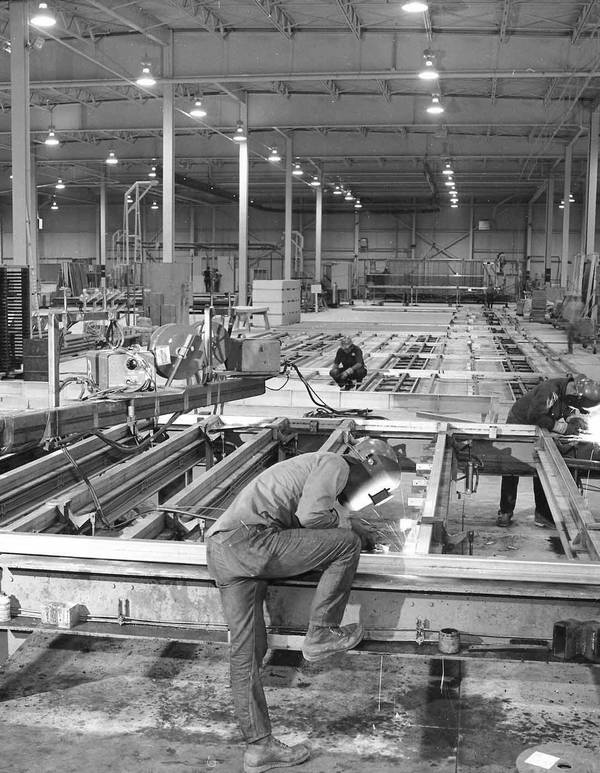
Modular medical buildings are produced inside in a climate controlled factory environment. Rain or other inclement weather has no effect on the interior structure of the building. Any products used in construction are not exposed to moisture thus preventing a build up inside the walls.  Windy, rainy or snowy days will not impact the modular construction process. Each step of a modular healthcare building is planned and executed on schedule and there's never a wasted day or delay due to inclement weather.

Customized Exterior

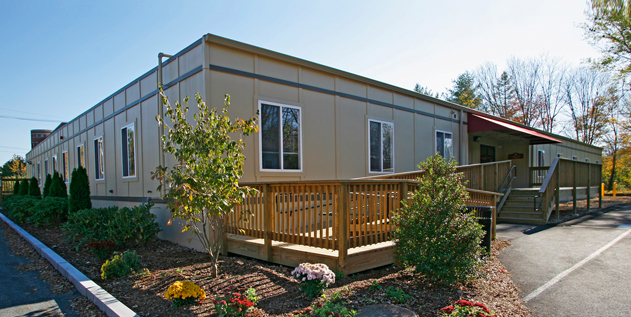
Modular clinics, laboratories, diagnostic centers and dental facilities are all custom made to your specifications. Conference rooms, kitchen facilities for employees and virtually any other amenity are available. One benefit of a professional medical structure is that any type of exterior can be used. Stucco, brick, cedar or other wood siding is available to make the building look just as good as a traditionally built building. Curb appeal is just as important in a commercial building as in any other and a modular building has that same adaptability. Shutters, awnings and landscaping can easily be added to the exterior as well.

Additional Advantage

Another advantage that modular medical buildings have over traditionally built structures is that they can be relocated if necessary. If a medical facility needs to move to another location, the sections can be disassembled and reassembled without compromising the integrity of the structure or the function of the facility. This is a distinct advantage over other structures. This capability can be built into the plans during the construction process.

The bottom line is that modular buildings for use in the medical field have advantages which far outweigh site-built structures. From the time saved in producing

Monday, July 29, 2013

Why Modular Building In North Dakota Makes Sense


modular building north dakota


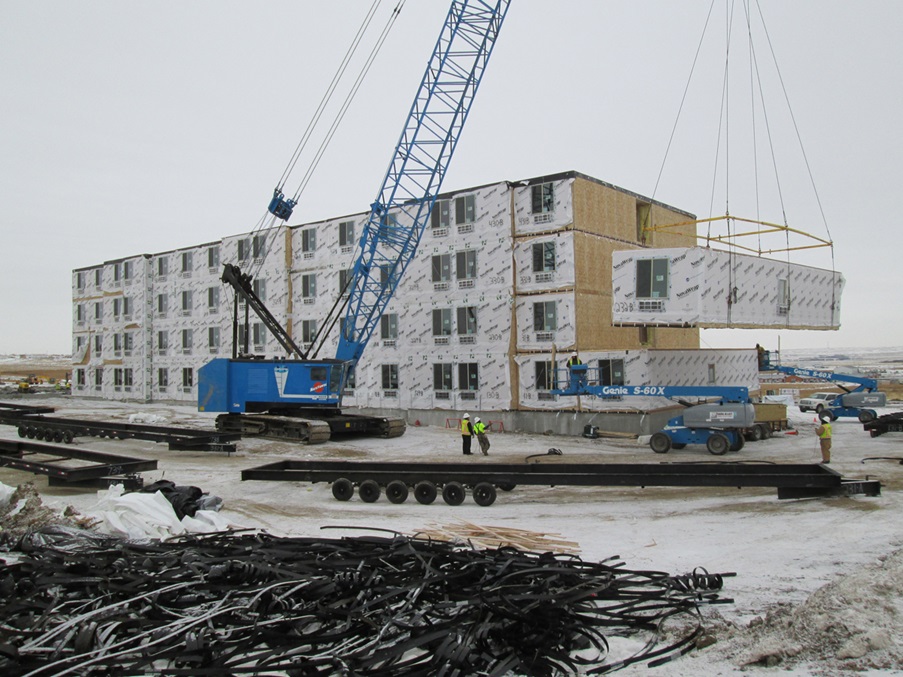
Unlike many other parts of the United States that are experiencing high unemployment and general economic struggle, North Dakota’s economy is booming thanks to a rich job market. The growth of the local oil and natural gas industries is causing a significant increase in the area’s population. Even with these great economic times, the North Dakota real estate market has struggled to keep up, as there are more people in the state than are homes to house them. Because of this, modular building in North Dakota has become the go-to building method for new construction projects.

The biggest advantage to modular building in North Dakota is that it allows for a building process that moves very quickly. In fact, modular construction is often 30-50 percent faster than traditional construction. A modular build allows for earlier occupancy, which makes it the clear choice for those who are looking to build rapidly in order to meet the increased demand for North Dakota housing. Those who are working on constructing large housing developments are seeing great results with modular builds, as well as individuals who are looking to build individual homes for themselves or their families.


Another advantage of modular construction is that homes are completed in a climate controlled factory environment, independent of weather conditions. Many stick-built construction projects often have to be put on hold until spring arrives once the difficult North Dakota winter weather hits, which is a huge set-back.

While many people often express concerns about the durability of modular homes, the truth of the matter is that they are extremely well built. Modular homes are built to safety standards that meet or exceed those of traditionally built buildings and can withstand even the most brutal winter weather. In a place like North Dakota where wind, heavy snows and very low temperatures are common, this is critical. Modular buildings put a high level of focus on quality, as they are completed with strictly defined processes that are created for the utmost level of consistency. Modular homes are very well put together and resistant to many of the structural errors that could occur in a stick-built construction project.

Overall, modular construction is taking over the North Dakota housing market for many reasons. They are fast to construct and are not limited to being worked on only during the warmer months of the year. More importantly, they are durable enough to withstand even the most severe North Dakota weather.

Wednesday, July 24, 2013

The Future of Modular Construction

Modular construction, which involves building sections of structures off-site and then transporting them to their final locations, has become increasingly popular in recent years. From schools and office buildings to prisons and correctional facilities, prefabrication allows industries to complete sophisticated projects in less time. Modular building is likely to continue to become more innovative over the next several years due to its time savings, efficiency and safety.

Reduced Waste

In a world that is becoming increasingly polluted, modular construction is a safer building method. Because the prefab units are being built in factory environments, construction waste is kept to a minimum. The material is cut precisely, ensuring reduced material waste. Building components or materials can be recycled or reused in other projects. Off-site construction, is an inherently greener process for its reduced waste and because there is less impact to the environment. Because sustainability is a key concept in today’s culture, companies that use green technology will undoubtedly remain ahead of the curve.

Increased Efficiency

Assembling structural units in a central location will also lead to increased efficiency. Because workers will not be at the mercy of unpredictable weather, construction projects can continue unabated for days on end. In fact, because site preparation occurs alongside manufacturing, the final installation can be completed at a much faster rate. With skilled teams building modules from carefully prepared blueprints, companies can ultimately expect to spend less on labor. Teams of workers will be supervised by qualified project managers throughout the entire process. With a more efficient and controlled building method, clients will choose this option more frequently in future projects.

Improved Safety

Modular construction is also much safer than traditional construction. Because fabrication occurs in a controlled environment, workers can avoid any unnecessary risks or safety-related incidents on the job site. Likewise, companies will be able to guard against theft or damaged materials/products, which can sometimes occur in semi-secured areas. In a workshop that is designed for manufacturing, a broad array of safety measures will always be in place. Workers can expect to complete their daily tasks without any weather delays or unforeseen setbacks.

The future of construction ultimately lies in innovative, efficient, and dependable building practices, thus making modular construction the increasingly popular choice.


Tuesday, July 23, 2013

Choose Modular for New School Construction or Expansion


prefabricated school building

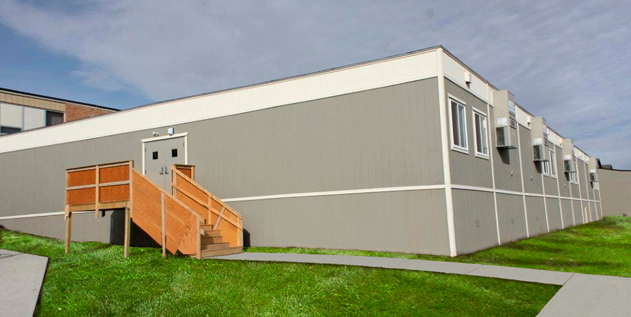
Construction often takes a considerable amount of time when it comes to schools and other educational buildings. Schools need to be constructed with the highest quality to ensure students learn in a safe, healthy and functional environment. Whether an educational facility is seeking new construction, or expanding its campus with temporary classrooms, choosing modular construction is often the most efficient method.
While a school is under construction or expanding, it has to move students to a different facility, or utilize temporary classrooms in order to continue to teach students. It is often an inconvenience for the entire staff, students and parents if relocation needs to occur. This is exactly why modular construction is such a good option. Temporary modular classrooms allow for easy construction, reduced construction time and students can continue their studies at their current location while construction takes place.

When it comes to school construction, a traditional construction crew can only work on the building for a set time period during the day. There are often weather delays and noisy site disruption to the daily functions of the school that could possibly push construction back a significant amount of time. Modular construction allows students and educators to continue learning with limited disruption and delay. 

Modular construction takes place off-site in a climate controlled environment. This saves the district money as it doesn't have to rent out temporary facilities for a set period of time and students are able to remain in their comfortable learning environment. Plus, because the school is built off site there is no downtime during construction.

New schools facing budgetary restrictions and time constraints can also benefit from modular construction. Prefabricated schools can meet educational space requirements and can be modified to satisfy a variety of purposes including classrooms, libraries, cafeterias, offices, media centers and laboratories. Modular construction allows new schools to be built much faster and efficiently than any other construction method.

Friday, July 19, 2013

Prefabricating Buildings Offsite, Then Installing Them In Location: Is There A Real Renaissance?


Modular Residential Building

In New York’s Inwood neighborhood, workers are busy stacking together weighty prebuilt modules made in Pennsylvania, as they piece together one of the city’s latest and more notable residential complexes built almost entirely offsite.

Prefabricated construction, as it's technically known, is constructing a building away from its ultimate location. Developers and architects increasingly look to the technique as a way to save time and money, even as they try to shake off the technique’s negative associations.
In the case of Inwood, project principals at the 28-apartment complex dubbed "The Stack" point out that construction should take only 10 months from start to finish, down from the 16 months they would project for traditional construction.
Developer Jeffrey Brown and architect Peter Gluck told International Business Times that the prefab option in this case is cheaper and faster and doesn’t drag down the quality of the finished work.
“There are savings in time, savings in money,” said Brown, who noted that The Stack is his first wholly prefabricated project. “There are advantages by just condensing the entire construction process.” 
At the site, workers deploy a crane to lift a sizeable wrapped box, or module, onto the top of the stack. Fifty-six such modules were built for this project by hand in a Pennsylvania factory over three months, and installation onsite is scheduled to take only a month.
Gluck, who has worked with prefabricated projects since the 1970s, also acknowledged obstacles specific to prefab building. Overseeing the manufacturing required close supervision, he said.
The technique is not new, said Gluck, citing a failed 1970s push to develop prefabricated homes in American suburbs. But both Gluck and Brown believe there’s a budding renaissance in offsite construction. That comes despite a widespread perception that prefab buildings lack design cachet and are used mostly for cheap and poor-quality mobile homes.
“I think there is a renaissance,” said Brown in an onsite interview, during the initial installations in July. “It’s starting with an awareness that this type of construction can be done with an imagination, and it can be done with a thoughtful design, and it can produce a really cool product.”
modular building in nyc
A May 2011 McGraw-Hill Construction report found that prefab building is emerging once again as a U.S. trend, tied partly to the popularity of "green" buildings and digital modeling.
After surveying hundreds of industry professionals, researchers found that the real estate industry is increasingly moving toward prefab to boost productivity and cut waste.
Michele Russo, who worked on that report, told IBTimes: “There have been some really huge transformational trends taking place in construction over the past three to four years, which have also created this push for prefab.”
modular construction new york
Digital modeling allows you to see how prefab pieces fit together, allowing better advance planning, while reduced waste and better safety for workers are also factors, she said.
“All of these things combined with an economy that put pressure on the industry means that they’ve looked for efficiencies,” she said. “Prefab has been around forever, but the next evolution of prefab has been in the last three or four years.”
Cheaper labor in a controlled factory environment, where there’s less safety risk, is part of the appeal, added McGraw-Hill Construction researcher Harvey Bernstein.
modular buildings in new york
Although interest in prefab technique ebbs and flows, the renewed interest this time could be permanent, he said.
“When you start to look at some of the real benefits, in terms of shorter schedules, lower costs and less waste, all of sizeable percentages, it just makes good bottom-line business sense,” he said.
“I think you’re going to see more and more predominance” of prefab, he said, even if only for specific small components, like plumbing or electrical systems.
The McGraw-Hill survey found that 98 percent of engineers, architects and contractors expected to be doing some prefab work by the end of 2013, up from 85 percent currently. While only a third of the industry now uses prefab construction heavily, that’s expected to grow to about 45 percent by the end of 2013.
Hospital, hotel and educational construction are the most promising fields for expansion into prefab construction, said the report.
Global interest in offsite construction is also rising. In one well-known example, the world’s tallest building, in China’s Changsha, will be prebuilt in four months. It just broke ground in June, reports Treehugger.
prefab construction in new york
Broad Sustainable Building, the Chinese firm building Changsha’s "Sky City," also built a 30-story building in Hunan last year in 15 days from prefab materials. Other notable recent examples include Seoul’s residential skyscraper Velo Towers and the Kilk building system, by Australian companies Elenberg Fraser and Unitised Building.
Gluck, too, said Japan has hosted several notable prefab projects, adding that Europeans seem to welcome the concept more than Americans. Bernstein said he had no data on global prefab trends but that anecdotally there is apparent heightened interest.
A September 2012 report on global prefab trends by industry researcher Timetric valued the global prefab market at $65 billion in 2011, with the European market representing about half of that, making it the largest single market. Asia is the second-largest market, where prefab is still rapidly becoming more popular.  
Nonetheless, prefab construction still has its critics. Some point out that budget savings for developers don’t always translate to cheaper homes for tenants, at least for single-family homes – individual prefabricated homes are often customized expensive trophies for wealthy clients. (Gluck wouldn’t disclose how much it cost per square foot to build The Stack, nor how much they’d rent their apartments for, but he said rents would be competitive.)
Other critics say that developers can’t turn profits by making prefabricated residential development their chief business because the market is still very underdeveloped. Bernstein noted, though, that Maine firm Cianbro is prefabricating power plants and refineries and shipping them out to Texas by sea, part of a rising trend of prefabrication in industrial development.  
On a related front, some argue that outsourcing construction to offsite factory workers lowers labor and building-quality standards.  
In New York, plumbers and mechanics sued the New York City buildings department earlier this week, alleging that safety standards were violated when developer Forest City Ratner used factory workers to build a planned 32-story complex offsite. The project is destined for Brooklyn’s Atlantic Yards.
In an email to IBTimes, Stewart O’Brien, a former commissioner at the city’s building department, said that workers doing prefab construction offsite must have the same credentials as those doing construction work onsite.
O’Brien is a party to the suit, for the plaintiffs, and now leads the New York Plumbing Foundation. A ruling by the city’s building department that normal plumbing and fire safety rules don’t apply to buildings made offsite is plainly wrong, said court papers.
“Modern day, more and more modular construction has moved toward high-density projects,” wrote O’Brien. “Should tenants or occupants of modular buildings be afforded any less safety protections?”
But back in Inwood, these sorts of concerns about prefab are far from people’s minds.
Marc Gee, another principal from the GLUCK+ architects behind the project, is more focused on prospective tenants. 
“We’ve had so many calls that I don’t think it’s going to be an issue,” he said of filling The Stack’s 28 rental flats. “There’s a lot of need for this kind of housing… This is really modern.” 
Written By: Nat Rudarakanchana

Thursday, July 18, 2013

Sustainable Modular Building Solutions

Often traditional construction takes a rather sizable toll on your carbon footprint, not to mention it can be exceptionally wasteful in terms of the material and products used for construction. Modular construction promotes sustainability and is a more efficient choice.
Modular construction is going to greatly reduce the amount of material you use. A modular building uses fewer materials and services than any other method of construction.
For starters, modular buildings utilize prefabricated construction and most of the elements are already designed and cut to specifications. This way, you don't have to worry about other kinds of waste while building.
Everything is designed accurately therefore when it is assembled on site you never have to worry about the assembly problems since everything is previously designed to fit perfectly into the next piece. The very nature of a modular building makes it designed for reuse. This means it doesn't have to be trashed once you move out or sell the lot. The entire building or some of its components can be reused for another building.