Showing posts with label green modular construction. Show all posts

Tuesday, January 21, 2014

Modular Construction: The Standard for Efficiency

While there are many different ways to build a home, the truth is that building in a modular fashion is an option that is both efficient and environmentally-friendly. Designing a home is no easy task even under the best of circumstances, but modular construction offers design flexibility and efficiency. Buyers appreciate the many advantages that modular construction provides to homeowners.

The Benefits

There are many different benefits that modular home users enjoy. Two of the biggest benefits of modular home construction are the customization capabilities and the environmentally-friendly process.

A modular home can be custom built to the buyer’s specifications or can be chosen from pre-designed standard models and even then, each house is carefully built with the home buyer in mind. Design and construction of this type of residential structure can be completed as a turnkey operation. Contemporary designs include exteriors covered in fine-quality paneling or shake, faux stone, and even brick. Many prefabricated designs available have numerous options for interior decorating such as natural stone flooring, double-strength storm windows, and custom fireplaces. These attractive homes are the modern way to begin home ownership or upgrade an existing home.

Modular construction is also an environmentally-friendly process that helps reduce waste and pollution in the construction process. Since the buildings are constructed in a factory environment, they are capable of recycling the waste and using it for other building components. Modular homes are built using green building practices that use the least amount of materials necessary to build a solid and safe home.

Putting it All Together

In the end, there are a lot of ways to have a home built today. Modular homes are a great option for people who want speedy construction and a sturdy home that is safe and good for the environment. When you look at it from all sides, it's easy to see why so many people choose modular construction when they build a new home.

Tuesday, January 7, 2014

Take the Green Pledge -- Go Modular

Materials for the building were selected from recycled or recyclable materials as much as possible.
When it comes to green building, modular construction can be an excellent way to obtain a sturdy and practical space that’s also environmentally friendly. Prefab construction helps reduce waste and pollution in the construction process.

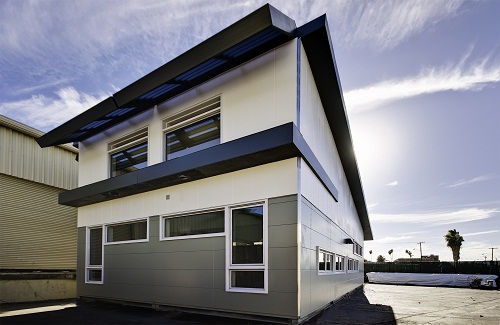
Green modular buildings are designed to take advantage of natural lighting and use high efficiency fixtures.
The use of better temperature insulation helps make the structure more efficient. Better insulation means less energy used in the heating and cooling process. That translates into both reduced stress on natural resources as well as lower utility costs.

"Going Green" when constructing a building also means a better indoor environment for its occupants. Utilizing non-toxic building materials helps create a space that won't cause health issues. Since the buildings are constructed in a factory environment, they are not exposed to any moisture from outside. This helps avoid any mold from forming in the modular structure. For individuals with allergies and chemical sensitivities, this is especially important.

When it comes to a new building, the choice is clear. Choosing green modular buildings is the way to both protect this precious planet and a way to achieve financial savings with the increased efficiency.


Contact us today for more information on ways to go green in commercial construction.

Monday, December 16, 2013

Benefits of Green Buildings

P.I.Q. High Performance Classroom
There are many benefits to green buildings, from minimizing the environmental impact of construction to producing less waste and providing a healthier indoor environment for its occupants; green buildings can be an environmentally friendly space solution.

Environmentally Friendly

Modular green construction has a lower impact on the environment over traditional construction methods. Many of the materials used for the walls and floors are made from recycled materials. Green modular buildings are excellent at conserving natural resources by utilizing high efficiency utilities and fixtures as well as making better use of natural lighting.

Less Waste

Green modular buildings require less energy to operate due to the utilization of better temperature insulation methods. This helps reduce operating costs by lowering heating, air conditioning and electric bills. Besides being energy efficient, green modular buildings decrease product waste due to the ability to reuse entire buildings or major components of the building.

Healthier Environment

Because modular green buildings are built in a climate-controlled factory environment, there is a reduced risk of moisture accumulating inside the building, which reduces the risk of mold. There are also minimal on-site greenhouse gas emissions because most of the work is done at the factory.

With its inherent reduced product waste and healthier environment, it is now easier than ever for builders to go green with the use of modular construction.

Thursday, August 15, 2013

Helping The Environment With Green Modular Construction

leed certification
P.IQ High Performance Classroom

Green modular construction is an eco-friendly practice that results in more efficient buildings. Modular construction not only protects the environment because the majority of construction takes place off site but also reduces operational costs for the user. Through the entire process, modular contractors keep the environment in mind with more efficient designs, safer construction and less waste. If you are seeking a green home or building, modular construction is the best choice.

Environmental Benefits

Buildings have a tremendous impact on the environment. With buildings accounting for 65 percent of electricity consumption, 36 percent of energy usage, 30 percent of greenhouse gas emissions, 30 percent of raw material use-and 30 percent of waste output totaling 136 million tons a year; its clear why green building construction is so beneficial. Modular construction allows for a significant reduction in solid waste that is harmful to the environment. Modular construction also improves the air and water quality by cutting down on the greenhouse gas emissions that are clogging the atmosphere. Additionally, it ensures that there is limited disruption to the surrounding environment.

Economic Benefits

Since modular buildings are designed to use less energy and water, owners will experience a significant drop in operating costs. For businesses, there is a noticeable improvement in employee productivity, due to reduced absenteeism from work related health issues. In addition, employees tend to be more satisfied with the environment and less likely to transfer their employment elsewhere. Green construction enhances the market and asset value of the building, should it be sold in the near future. Modular buildings can include solar panels, programmable thermostats, structural insulated panels, low-emitting materials and other efficient materials to diminish the amount of heat gain inside, thus saving owners money on cooling costs.

Health and Community Benefits

Modular construction is intended to enhance the comfort, health and productivity of all residents or employees. Improved air quality within the building will successfully avoid triggering certain health conditions like chronic migraines, asthma, allergies or common colds. The use of translucent walls increases the amount of natural sunlight shining into the building, which is sure to lift the occupants’ moods. Buildings can also be designed to take advantage of natural day lighting.


The mission of green modular construction is to transform the way communities/organizations design, build and operate while contributing to a healthier environment.

Tuesday, July 16, 2013

Why Modular Is the Best Green Choice For Home Construction

Building a house with traditional construction is not the only way to build. Most traditionally built homes disturb the environment and waste materials. Using modular construction in order to build a new home allows much less disturbance, pollution and product waste resulting in a healthier and green environment.

Materials that are used to build a green modular house can be recycled and used again. Factory construction not only eliminates waste by utilizing recycled materials but allows inventory to be better controlled and building materials are protected from outdoor elements.

Modular green homes offer greater flexibility and reuse. Modular homes can be relocatable meaning they can be easily disassembled, relocated or refurbished for new use. This reduces the cost of new construction and raw materials.

Green modular homes offer healthier living environments and may include energy efficient features. Some options include daylighting, recycled carpet squares, extra insulation and energy efficient lights, fixtures and appliances. Additionally, factory construction eliminates the potential of moisture or mildew to enter your green modular home. Quality control is completed at the factory, ensuring the home meets and exceeds all safety standards.

Monday, April 8, 2013

World’s First Floating Green Building


COTTONWOOD COVE MARINAWORLD’S FIRST FLOATING GREEN BUILDING  TO RECEIVE LEED® GOLD CERTIFICATION

US National Park Services, The Government of USA has issued the following news release:

Cottonwood Cove Resort and Marina on Lake Mohave has made history, becoming the world's first floating green building to receive the prestigious LEED® (Leadership in Energy and Environmental Design) Gold certification by the U.S. Green Building Council (USGBC). Spearheaded by the National Park Service and Forever Resorts, LLC, the marina building opened June 2011, serving as the marina's operations office.

From decking made of rice hulls to exterior stucco made of recycled tires, from the beginning, the marina was lauded for its use of green materials. The floating eco-friendly structure features sustainable modular construction and state-of-the-art energy-efficient and environmentally responsible materials and fixtures. Use of low or no-volatile organic compound materials, paints and adhesives rid the building of the typical "new building" smell improving the overall indoor air quality.

For commercial buildings and neighborhoods to earn LEED certification, a project must satisfy all LEED prerequisites and earn a minimum 40 points on a 110-point LEED rating system scale. According to the UGSBC, participation in the voluntary LEED process demonstrates leadership, innovation, environmental stewardship and social responsibility.

"We, together with the National Park Service, are proud to have made history with this achievement," said John Schoppmann, executive vice president, Forever Resorts. "This building embodies Forever Resorts' company-wide commitment to embracing eco-friendly, sustainable business and public-private partnership principles."

The project's key earth-minded elements and commitments include the Forever Resorts Forever Earth Environmental Management System and a mix of new and existing programs:

Green Cleaning Program throughout the resort 
Green Purchasing Program 
Energy and Environmental Education Programs for boaters and community members 
Extensive energy saving materials and systems, including high-performance insulated glass 
High-efficient HVAC equipment and delivery systems 
Extensive use of recycled and regionally extracted and manufactured materials, such as concrete, steel, drywall, metal studs and carpet 
Finish materials, paints, adhesives, caulks and sealants that contain low or no volatile organic compounds to ensure healthy indoor air quality 
Extensive natural daylight and views to the outdoors throughout, maximizing east/west orientation 
Recycled and recyclable building and landscape materials 
Prevention of night sky pollution

For more information please visit: M SPACE HOLDINGS
Copyright 2013 Plus Media Solutions Private Limited 
All Rights Reserved

Source: http://www.elp.com/news/2013/04/07/washington-cottonwood-cove-marina-world-s-first-floating-green-building-to-receive-leed-gold-certifi.html

Monday, March 4, 2013

Benefits of Modular Construction for Building Green


In this day and age, the phrase green building is everywhere. For those who unfamiliar with green buildings, they are built to minimize potential environmental impacts and hazards often caused during and after the construction work. In addition, a green building promotes sustainable energy usage while offering a healthy indoor environment for occupants. 

Modular construction is the best choice for building green homes and buildings, because the majority of construction occurs in a climate-controlled factory environment, protecting materials from outdoor elements, reducing product waste and improving efficiency. With less work done on site, a modular construction project also helps in reducing environmental impacts and site disruption.

Now that the concept of a green building is clear, let’s discuss the benefits of modular construction for building green homes and buildings. Modular materials may include recycled glass, wood, carpet and bamboo. Some energy efficient features may include tankless water heaters, programmable thermostats, bamboo flooring, solar panels and ENERGY STAR appliances.

Modular buildings can be disassembled and relocated to other sites. This reduces the energy and raw materials needed to construct a new building. Modular construction has the ability to reuse entire buildings or major components.

Modularbuilding doesn’t always require heavy machinery and other construction machines. As a result, there is minimal noise pollution and greenhouse gas emission due to construction work. In addition, modular structures use alternative energy resources including both solar and wind energy, reducing operational costs.

Modular construction ensures better quality management, reduced product waste and a healthier environment by utilizing off site construction methods. The excellent and consistent quality control of modular construction, makes it a great choice for green projects.