Friday, June 28, 2013

Modular Construction for Emergency Housing Solutions


emergency disaster planning

Mother nature has unleashed her fury this year with all sorts of disastrous storms.  Hurricanes, tropical storms, earthquakes and tornadoes have displaced large numbers of residents and businesses.  Government agencies immediately stepped in to help victims by providing food, water and emergency shelters.

After these initial steps, areas struck by natural disasters often look to rebuild.  Most look for an immediate temporary solution to begin, and then consider permanent solutions for the future.  Portable disaster housing is the only choice in many scenarios because it provides immediate relief.

Traditional housing solutions often take too long to construct and sometimes, new construction is not feasible with the poor ground conditions caused by the storm and damage and debris.  In emergencies, modular construction has become the housing solution of choice because the buildings are primarily constructed off-site and there is less impact to the environment.

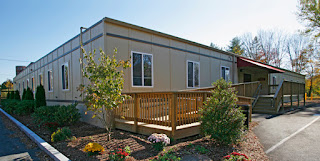
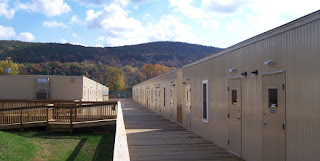
Modular buildings and homes come in a variety of sizes and finishes to meet the needs of the specific emergency at hand.  They can be customized to meet your exact space needs and if needed immediately, pre-leased modular buildings can often be quickly refurbished and delivered.  Modular units are far easier to transport and assemble than traditional disaster housing units.


When a disaster strikes, the best emergency response shelters and buildings should be available to those in need.  Modular emergency response buildings ensure you will receive a quality home quickly to assist in recovery efforts.

Thursday, June 27, 2013

Modular Schools Help Reduce Classroom Overcrowding


temporary classroom

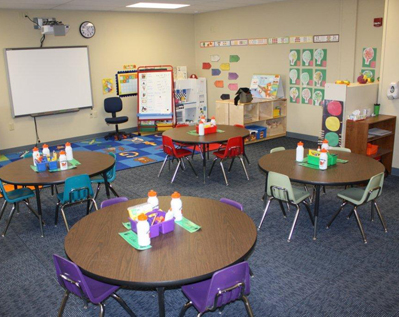
Education administrators may wonder about the advantages of using modular construction in order to reduce school overcrowding.  Modular schools can be built to look and feel just like current school buildings while being built in a fraction of the time of a traditionally built school building.

Fast Building: One of the huge advantages of modular classrooms is that they can be constructed quickly.  It has been estimated that modular buildings can be built 30 to 50 percent faster than conventional buildings.  The sooner more space is built; the sooner students can occupy the classrooms, which will reduce overcrowding.

Minimal Disruptions: Most of the construction takes place off the school grounds, which is going to minimize disruptions for the teachers or students. 

Different Options to Choose From: One of the great things about modular schools is that it offers the ability to choose the design that will meet their space needs. Additionally modular buildings can be designed to accommodate many uses such as labs, cafeterias, classrooms and offices.

Temporary Buildings Or Permanent: Another advantage of going with modular buildings is that they can be temporary, relocatable or permanent, depending on the schools need.

For schools in need of more classrooms, there is no better choice than modular school buildings

Wednesday, June 26, 2013

North Dakota Modular Solutions

There are a number of reasons why modular construction is the best choice for North Dakota and surrounding areas facing unprecedented growth. Modular construction can quickly and efficiently meet the North Dakota housing and infrastructure needs

Flexibility
When people think of modular construction, they often think of building construction that is highly limited. However, there is nothing that could be further from the truth. With modular construction there are almost no limitations to what can be built. North Dakota modular buildings can be custom or traditional, permanent or temporary and single or multi-story.

Fast Construction
A modular building is primarily constructed in a factory. While modules are being constructed off-site, site work commences to install the foundation and other necessary items. This means work will get done much faster allowing earlier occupancy for North Dakota residents and businesses.

Housing In North Dakota
North Dakota housing should be able to withstand heavy wind and snow that is common to the area. One of the advantages of modular construction is that modular homes can be built to withstand heavy wind and snow. With several months of freezing temperatures, traditional construction is often put on hold and takes much longer to complete. Modular construction is a fast and reliable option for North Dakota homes because it is not greatly impacted by weather.

The high demand for housing in North Dakota is coupled with a need to build the infrastructure to accommodate the growing population. Modular projects can be completed up to 40 percent faster than with traditional construction therefore is an excellent choice for commercial projects. Some options include modular classrooms, modular offices, modular medical clinics and modular hotels.

As the oil extraction projects continue to grow and companies continue to hire more staff, the housing and infrastructure in North Dakota will be a primary concern. Modular construction meets the extremely high demand forhousing and commercial growth in North Dakota.

Tuesday, June 25, 2013

Fast Track Your Franchise Launch With Modular Building


modular business buildings

When you have a new business that you want to get up and running it is important to move quickly. Launching multiple business locations or franchises throughout a large area can be accomplished much faster by choosing modular construction.

When opening a franchise, it is important that all buildings have a similar look and feel. Modular franchise buildings can be designed to give your business a uniformed look and consistent brand image. Exact interior and exterior finishes, paint colors and floor plans can be custom designed to accomplish this.  Modular franchise buildings can be used for small concession stands, restaurants, banks, coffee shops, hotels, convenience stores and much more.

A traditional building is built piece by piece on-site. This exposes building materials to outdoor elements that may become damaged by exposure to wind, rain and poor ground conditions. While this is how most homes and buildings are constructed, this is not the only option available to you. With a modular building almost the entire building is constructed off-site, protecting it from harsh elements and allowing the construction to take place without any set-backs. Due to the modular building being completed in a climate controlled factory setting, the dry materials used minimizes the chance of high levels of moisture being trapped in the new building. This shortens the construction time frame and reduces of exposure to the elements, ensuring a durable and strong building.

Modular or prefab buildings can be easily relocated. This is helpful if a business owner finds another location that proves more prosperous. The business owner will not need to go through the trouble of new construction, but can simply move their modular franchise to the new location.
In the world of business time is money, so when expanding your business into a franchise it is necessary to move as quickly as possible. This way, you can bring in as many customers as possible and start generating revenue sooner by choosing a modular franchise building.

Friday, June 21, 2013

Different Uses of Modular Buildings


Modular Healthcare Building
Modular buildings are used for a variety of reasons. Prefabricated buildings can have permanent or temporary uses. The modular building methods are used to build practically any building type and are as basic or as beautiful as the customer desires.

Some temporary uses include construction offices, temporary school rooms during building transitions or office buildings for growing companies. Although buildings are temporary, they can also be aesthetically appealing. Temporary modular buildings are the perfect solution for expanding companies, schools or organizations.

Permanent modular buildings are used for a long range of applications that include offices, schools, hotels, fast food restaurants, banks, sales centers and residential complexes. Permanent modular structures can be traditional or highly customized utilizing standard materials or custom finishes. Permanent modular capabilities range from small single story buildings to large multi-story complexes.

Whether you choose a permanent or temporary approach, prefabricated methods allow for a more streamlined construction time-line. Building construction and site work occur simultaneously, resulting in significant savings. 

Thursday, June 20, 2013

What is Modular Construction?


Modular Building Contractor

Modular buildings are self-contained structures that are built in a climate-controlled factory. Buildings are constructed in sections, or modules, so they can be easily transported. The sections of the building are shipped to the final job site where they are installed on a foundation created specifically for the prefabricated construction. All of the necessary wiring is done in the factory so utilities just need to be connected when the building arrives at its location.

Modular buildings are made from concrete, steel or wood. Like site-built structures, the material used for prefabricated construction complies with local building codes. Custom buildings can be created to meet the needs of each modular building customer. The modular construction process is more environmentally-friendly than traditional construction because there is less product waste in the construction process. Modular buildings also tend to be more storm and earthquake resistant than site-built construction because buildings are designed to withstand the shipping process.

Because the modules are constructed inside a factory, weather is not a factor in the construction process. Modular construction projects are more likely to be completed on-time and on-budget than projects that are built on-site.

Most of the interior finishing is completed in the factory including carpeting, wiring and painting. Prefab construction arrives on-site nearly ready to be occupied. The structure is installed quickly, with limited disturbance to the community. Because the foundation is ready when the modules arrive at the site, the only things that need to be done are final exterior finishing, connections and landscaping.

Modular buildings range from basic structures used as additions to an existing building, to stand-alone, multi-story modular buildings customized to meet the specific needs of a client. Modular structures can be built quickly without sacrificing quality because of the streamlined construction process.

Wednesday, June 19, 2013

Percentage of Modular Homes Holds Steady over the past 10 Years

Modular construction of 1 & 2 family residences has remained steady at about 2% of overall new home starts for the last ten years. 


According to the U.S. Department of Commerce, new single family residential construction houses completed have dropped from 1,218,000 homes in 2007 to 447,000 in 2011.  Modular homes accounted for an average of 2.4% of new single family houses completed annually, or 31,000 dropping to about 10,000 over that same period.

For March 2013, the US Department of Commerce reports single family construction sales at 417,000 annually with a median sales price of $279,900.  At 2.4% the modular industry accounts for about 8,300 houses.

The percent of modular home starts varies significantly by region with the Northeast being the strongest at 6.8% of all new housing starts, followed by the Midwest at 3.9%; the south at 1.3% and finally the west at less than 0.5%.

Region
Total
Northeast
Midwest
South
West
Number
417,000
41,000
51,000
215,000
110,000
Total Modular
8,300
2,800
2,000
2,800
600

Based on this data, the single family modular home industry is approximately $2.3 billion in the United States for year end 2012.